You stretch your hamstrings, but they still feel tight the next day. You roll your calves, but they still feel stiff. So, does that mean your muscles are actually too short? Not necessarily.
“Tight muscle = short muscle” is a common assumption, but the relationship between what you feel and what is physically happening in your muscles is much more complicated.
What does “tight” actually mean?
When someone says a muscle feels tight, they might mean stiffness, tension, restricted movement or simply that a particular position feels uncomfortable.
The important point is that tightness is a sensation, not a diagnosis.
Your nervous system has a major role in determining how comfortable you are moving into a particular range. Fatigue, changes in training load, previous injury, pain, strength and simply being unaccustomed to a movement can all influence how a movement feels.
So, a muscle feeling tight does not automatically mean it needs to be “lengthened”.
Does stretching help?
It can. Stretching is an effective way of improving range of motion, particularly when performed consistently over time. However, research suggests that this improvement is not necessarily because the muscle is being permanently “stretched longer”.
Recent research indicates that changes in stretch tolerance and muscle-tendon stiffness may contribute to improvements in range of motion, while changes in muscle fibre length appear to play a smaller role than commonly assumed (Ingram et al., 2025).
This helps explain why you might feel more flexible after stretching without having fundamentally changed the structure of your muscle.
And that is not a bad thing. If stretching helps you move more comfortably, it can be a useful tool.
But stretching isn’t the only option
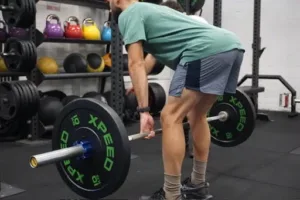
This is where things get interesting. Research has found that strength training can also improve flexibility and range of motion, with a similar degree as stretching.
For example, someone who feels “tight” through their hips during a squat may benefit from stretching, but they may also improve by gradually strengthening the muscles around the hip while moving through a comfortable and progressively larger range.
The best approach depends on why the movement feels restricted.
What should you do with a “tight” muscle?
Instead of immediately asking: “What do I need to stretch?”
Try asking: “Why does this movement feel restricted?”
Does the restriction improve once you warm up? Has your training recently increased? Is there pain? Does the area feel weak? Have you stopped doing a movement you previously performed regularly? These questions can tell us much more than simply labelling a muscle as “tight”.
Sometimes stretching is exactly what you need. Other times, strength training, gradual exposure to movement, modifying training load, or addressing an injury may be more appropriate.
The takeaway …
A tight feeling does not automatically mean a short muscle — and it does not automatically mean you need to stretch.
Stretching is one useful tool for improving movement, but it is not the universal solution to muscle tightness. Understanding why you feel restricted is often more important than simply trying to stretch the sensation away.
At Inertia Health Group, we look beyond the label of “tight” to understand what may be contributing to your movement restriction and how to help you move more comfortably and confidently.
If you’d like guidance tailored to you, our team is here to help.
Written by
Alix Way
Physiotherapist | Master of Physiotherapy
University of Sydney
References
Afonso, J. et al. (2021) ‘Strength training versus stretching for improving range of motion: a systematic review and meta-analysis’, Healthcare, 9(4), 427.
Alizadeh, S. et al. (2023) ‘Resistance training induces improvements in range of motion: a systematic review and meta-analysis’, Sports Medicine, 53, pp. 707–722.
Ingram, L.A. et al. (2025) ‘Mechanisms underlying range of motion improvements following acute and chronic static stretching: a systematic review, meta-analysis and multivariate meta-regression’, Sports Medicine, 55, pp. 1449–1466.