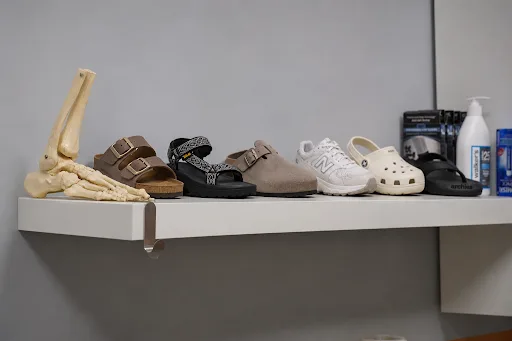
As the weather warms up, many of us swap our sneakers and enclosed shoes for thongs, slides and sandals. Summer footwear is convenient and comfortable, but not all styles offer the same level of support, cushioning or stability.
So, what should you look for when choosing summer footwear? And are some styles better suited to certain foot conditions than others?
Here’s a breakdown of some common options and their pros and cons.
1. Traditional thongs and slides
Examples: Havaianas and other basic flat thongs or slides
Traditional thongs and slides are a summer staple. They’re lightweight, affordable and easy to slip on, making them ideal for the beach, pool or quick trips.
Pros
- Lightweight and convenient.
- Easy to slip on and off.
- Generally affordable and easy to replace.
Cons
- Often provide minimal arch support, cushioning or structure.
- Traditional thongs can encourage toe gripping to keep them on.
- May be less suitable for prolonged walking or standing.
They’re perfectly reasonable for occasional, casual use, but may not be the best option for spending an entire day on your feet.
2. Supportive thongs and slides
Examples: Archies, Lightfeet, Scholl Orthaheel
Supportive thongs and slides offer an alternative to traditional flat styles. Many feature a contoured footbed, built-in arch support and additional cushioning while retaining the convenience of open footwear.
Pros
- Contoured footbeds can provide additional support.
- Often offer more cushioning than traditional flat styles.
- Lightweight and convenient for everyday summer wear.
Cons
- The arch contour may not suit everyone’s foot shape.
- Less foot coverage and security than a sandal with straps or a closed shoe.
- Some people may need time to adjust to the shape of the footbed.
Archies thongs and slides are an option worth considering if you enjoy wearing open footwear but would prefer something with more structure than a traditional flat thong. As with any shoe, comfort and individual suitability are what matter most.
3. Clogs and casual slip-on footwear
Examples: Crocs and similar styles
Clogs have become a popular everyday option, particularly for their convenience and relaxed fit. They’re lightweight, easy to clean and often have a roomy toe box.
Pros
- Lightweight and easy to clean.
- Roomy toe box, which can be helpful for people who dislike pressure over their toes.
- Often cushioned and comfortable for casual wear.
- Many styles include a heel strap for additional security.
Cons
- Support and fit can vary considerably between styles.
- Loose-fitting designs may allow the foot to move around.
- Wearing them without the heel strap may encourage toe gripping to keep them on.
Crocs and similar footwear can be a convenient casual option. For a more secure fit, consider using the heel strap, particularly when walking for longer periods.
4. Supportive sandals
Examples: Birkenstock, Teva, Ecco, and other contoured or adjustable-strap sandals
Supportive sandals generally offer more structure and foot security than traditional thongs or slides. Many feature adjustable straps, contoured footbeds and supportive soles.
Pros
- Adjustable straps can help secure the foot.
- Contoured footbeds may provide additional support.
- Greater foot security than many open slip-on styles.
Cons
- Some styles have a firm footbed and may take time to get used to.
- Can be heavier or bulkier than thongs and slides.
- The shape and fit may not suit every foot.
Birkenstocks are a well-known example, with their contoured cork footbed and adjustable straps. They can be a good option for people wanting an open shoe with more structure, provided the fit is comfortable.
5. Sneakers and lightweight walking shoes
Examples: breathable walking shoes and casual sneakers
Although they might not be everyone’s first choice in summer, sneakers and lightweight walking shoes can be one of the most practical options for longer walks and days spent on your feet.
Pros
- Greater foot coverage and protection.
- Often provide good cushioning and stability.
- Suitable for longer walks and higher activity levels when appropriately fitted.
Cons
- Can feel warmer during hot weather.
- Less convenient to put on and take off.
- May feel restrictive for people who prefer open footwear.
For travel, extended walking or active days, a breathable, well-fitting walking shoe is often worth having in your summer footwear rotation.
What should you look for in summer footwear?
When choosing summer footwear, consider:
- Fit: Your foot should sit comfortably within the shoe without excessive movement or pressure.
- Cushioning: Some cushioning can improve comfort, particularly if you’re on your feet for extended periods.
- Support and stability: Consider whether the shoe provides enough structure for your foot and the activities you’re doing.
- Foot security: Straps or a secure fit can reduce the need to grip with your toes.
- Your activity: A shoe that’s suitable for a quick trip to the shops may not be the best choice for a full day of sightseeing or walking.
It’s also worth introducing new footwear gradually, particularly if you’re moving from enclosed shoes to a much flatter or less supportive style.
The bottom line
There isn’t one perfect summer shoe for everyone. The best option depends on your foot shape, comfort, activity levels and whether you’re managing an existing foot condition.
Traditional thongs may be fine for short periods, while supportive thongs, slides and sandals can offer additional structure for everyday wear. For longer walks and more active days, a well-fitting sneaker may be the better choice.
If you’re experiencing ongoing foot pain or are unsure which footwear is best suited to your needs, a podiatrist can help assess your feet and provide individual footwear advice.
The goal is to keep you comfortable and active throughout summer, without letting your footwear get in the way.
Written by:
Claudia Filleti
Senior Podiatrist | Bachelor of Podiatry
University of South Australia
References
- Zhang X, Paquette MR, Zhang S. A comparison of gait biomechanics of flip-flops, sandals, barefoot and shoes. Journal of Foot and Ankle Research. 2013;6:45. doi:10.1186/1757-1146-6-45.
- Price C, Andrejevas V, Findlow AH, Graham-Smith P, Jones R. Does flip-flop style footwear modify ankle biomechanics and foot loading patterns? Journal of Foot and Ankle Research. 2014;7:40. doi:10.1186/s13047-014-0040-y.