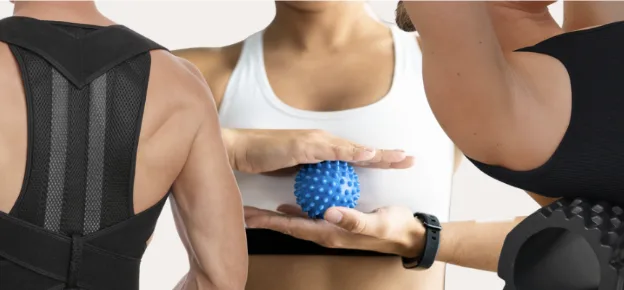
Not sure if foam rollers, massage guns, resistance bands or braces are worth it?
We explain what helps, what is overhyped and when to ask a physio.
We see them online everyday – rehab tools promising to loosen tight muscles, fix posture, speed up recovery or prevent injury.
Foam rollers, massage guns, trigger balls, resistance bands, posture straps and braces can all have a place. Some are genuinely useful. Some are helpful only in the right context. Others are probably more impressive in the packaging than they are in real life.
So, rather than giving each tool a rigid score, here is our clinical take on what is worth using, what is often overhyped and where these tools can genuinely help in rehab and recovery.
Are foam rollers actually useful?
Foam rollers can be useful if they help you feel less stiff, warm up before exercise or settle soreness after training.
What they do not do is “break up scar tissue” or permanently fix tight muscles. That explanation gets used a lot, but it is not really how the body works.
The best use? Roll briefly, then move. If foam rolling helps you squat, run, stretch or train more comfortably afterwards, it can be a helpful extra.
Clinical take: helpful for short-term relief, but not a complete rehab plan.
Do trigger balls help with tight muscles?
Trigger balls, lacrosse balls and spiky balls can be handy for targeted self-massage around areas like the glutes, calves, upper back or feet.
The biggest mistake we see is people pressing too hard. More pain does not mean more benefit. If you are holding your breath or bruising yourself, it is probably too much.
Used gently, a trigger ball may help you feel looser and move more comfortably. Just remember that short-term relief does not always mean the underlying issue has been fixed.
Clinical take: useful for targeted relief, as long as you do not chase pain.
Why resistance bands are still one of the best rehab tools
If there is one rehab tool that usually earns its place, it is the resistance band.
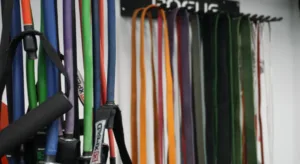
Bands are cheap, portable and useful for a wide range of exercises. Physios and exercise physiologists often use them for home exercise programmes, warm-ups, strengthening, balance work and gradual return-to-activity plans.
The band itself is not magic. The exercise choice, dosage and progression matter most. But when used properly, bands can be one of the easiest ways to stay consistent between appointments.
Clinical take: probably the best-value rehab tool for most people.
Do posture correctors fix posture?
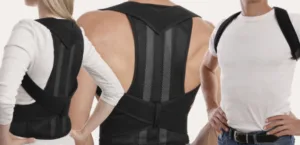
Posture straps are popular because they promise a simple fix: pull your shoulders back and solve the problem.
Unfortunately, neck, shoulder and back discomfort are rarely that simple.
A posture corrector may help as a short-term reminder to change position, but it should not be relied on to “fix posture”. Most people benefit more from strength, regular movement, workstation changes and learning how to vary positions through the day.
There is no single perfect posture you need to hold all day. Often, your best posture is your next posture.
Clinical take: often overhyped. Maybe useful as a cue, but not a long-term solution. You’re better off doing strength work with an Exercise Physiologist!
Are massage guns worth buying?
Massage guns feel good for many people, and that matters. They may help with short-term soreness, relaxation or warming up before exercise.
But they are not essential. You do not need a massage gun to recover well, and it should not replace sleep, sensible training, strength work or a proper rehab plan.
Also, use common sense. Avoid using one aggressively over swollen, bruised, irritated or acutely injured areas.
Clinical take: nice to have, not a must-have.
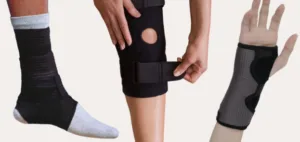
When are braces and supports helpful?
Knee sleeves, ankle braces and wrist supports can be useful in the right situation.
They may help with comfort, confidence or support during a return to activity. For example, an ankle brace after a sprain can sometimes be helpful while someone rebuilds strength, balance and control.
The issue is when a brace becomes the whole strategy. Long term, most people still need to build capacity so they are not relying on support forever.
Clinical take: useful in the right phase, but best paired with active rehab.
Before you buy something…
Rehab tools are often marketed very well. That does not mean they are all clinically useful.
Be careful with products that promise instant fixes, permanent correction or dramatic results with very little effort. Big online ratings, influencer videos and “doctor recommended” claims can be helpful to notice, but they are not the same as advice for your specific injury.
Before buying something, ask:
- Does this match my actual problem?
- Do I know how to use it properly?
- Is it helping me move, train or recover better?
- Is it replacing something more important, like strength work or load management?
- Has a physio, exercise physiologist or health professional recommended it for me?
Often, the best rehab tool is not the most expensive one. It is the one that fits your plan and helps you stay consistent.
Written by
Angus Szajer
Physiotherapist
Bachelor of Physiotherapy
University of South Australia
References:
Lin, I., Wiles, L., Waller, R., Goucke, R., Nagree, Y., Gibberd, M., Straker, L., Maher, C.G. and O’Sullivan, P.P.B., 2020. What does best practice care for musculoskeletal pain look like? Eleven consistent recommendations from high-quality clinical practice guidelines. British Journal of Sports Medicine, 54(2), pp.79–86.
Lopes, J.S.S., Machado, A.F., Micheletti, J.K., de Almeida, A.C., Cavina, A.P. and Pastre, C.M., 2019. Effects of training with elastic resistance versus conventional resistance on muscular strength: a systematic review and meta-analysis. SAGE Open Medicine, 7, p.2050312119831116.
Vuurberg, G., Hoorntje, A., Wink, L.M., van der Doelen, B.F.W., van den Bekerom, M.P.J., Dekker, R., van Dijk, C.N., Krips, R., Loogman, M.C.M., Ridderikhof, M.L. and Smithuis, F.F., 2018. Diagnosis, treatment and prevention of ankle sprains: update of an evidence-based clinical guideline. British Journal of Sports Medicine, 52(15), p.956.
Wiewelhove, T., Döweling, A., Schneider, C., Hottenrott, L., Meyer, T., Kellmann, M., Pfeiffer, M. and Ferrauti, A., 2019. A meta-analysis of the effects of foam rolling on performance and recovery. Frontiers in Physiology, 10, p.376.