Depending on how your previous season finished, the offseason may come as a welcomed break, or you might already be itching to get back on the pitch! Either way, what you do during the offseason and preseason can play an important role in setting yourself up for a successful season ahead.
After months of training, competing and potentially playing through a few niggles, the offseason provides an opportunity to recover, address any lingering injuries and identify areas of your physical performance that could benefit from improvement and specific focus.
Rather than viewing the offseason as simply time away from sport, think of it as an opportunity to prepare your body for the demands of the season ahead.
Whether your goal is to improve your strength and speed, build your fitness, reduce your risk of injury or simply to get through the season feeling better than last year, having a structured approach to offseason training and preseason load management can make all the difference.

The Offseason: An Opportunity to Reset and Rebuild
The end of the sporting season is an important time to allow your body to recover. After a long season, particularly one involving finals and an extended competition schedule, your body has accumulated significant physical and mental demands. Taking a planned reduction in training load allows you to recover from these demands and provides an opportunity to address areas that may have been neglected during the season.
However, recovery doesn’t necessarily mean doing nothing for several months.The offseason is an opportunity to shift your training focus away from competition and towards developing the physical qualities that will help you perform better next season.
Below we will cover a few important areas to consider during our preseason.
Address any lingering injuries or niggles
Did you finish last season with an annoying hamstring niggle? Have you been managing some knee pain, a sore groin or recurring calf tightness? The offseason is an ideal time to address these issues rather than hoping they disappear when training starts again.
Continuing to train or play through an injury can sometimes mean that the underlying problem is never properly addressed. Taking the opportunity to have an appropriate assessment and rehabilitation plan can help you understand what is contributing to your symptoms and what needs to be done before returning to full team training or competition.
Additionally, Whalan et al. (2020) found that semi-professional footballers were 3.6 to 6.9 times more likely to sustain a time-loss injury within seven days after reporting a minor or moderate non-time-loss complaint. This suggests that even those “niggles” may signal increased injury risk which are worth addressing early on.
Assess your physical performance
The offseason also provides an opportunity to take a step back and assess your current physical capabilities which are most relevant to your activity or sport.
An assessment or screening process can help identify areas that may benefit from further development.
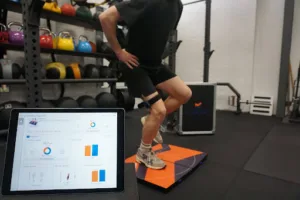
Depending on your sport and individual needs, this might include assessing:
- Strength: Do you have adequate lower-body and upper-body strength for the demands of your sport?
- We know in soccer for example, the “big ticket items” here surround adequate hamstring and groin strength as these are commonly injured areas
- Flexibility and mobility: Are there any limitations affecting your ability to move efficiently?
- Reduced ankle flexibility, particularly in dorsiflexion (i.e.; bringing your knee over your foot in standing) can increase your risk of future ankle sprains (Young et al., 2013)
- Power: Can you generate force quickly for acceleration, jumping and changing direction?
- Before training power, we want a good baseline of strength given power is a combination of strength and speed. Additionally, timing plyometric training is important particularly when considering adding in high intensity loading during the season. Therefore, preseason may be a good time to focus on your power.
- Motor control: Can you maintain appropriate control and technique during single-leg movements, landing and deceleration?
- For example, individuals who have undergone ACL reconstruction were found to have reduced dynamic stability during a single leg squat on either leg compared to healthy controls (Culvenor et al., 2016). This provides a relevant area of focus in an individual’s rehabilitation, but also in their prevention program
- Conditioning: Do you have the aerobic and anaerobic fitness required to meet the demands of your sport?
The purpose isn’t simply to identify what you are good or bad at, nor does it predict future injury. It’s about establishing a baseline to identify areas to improve, along with providing tangible outcome measures to track progress or particular higher risk areas for potential injury.
Develop an individualised training plan
Once you have identified your areas for improvement, the next step is developing a plan. A well-designed offseason program should consider your injury history, current physical capabilities, sporting demands and individual performance goals.
For example, one athlete might benefit from improving lower-limb strength and hamstring capacity, while another may need to focus on aerobic conditioning, power or movement control. Your program should ideally incorporate a combination of strength, conditioning, mobility and sport-specific preparation.
Importantly, the goal isn’t just to reduce injury risk. Developing these physical qualities can also help improve your ability to perform, tolerate the demands of training and compete consistently throughout the season. This is where a screening can be useful, as you want your plan to be specifically tailored to you ensuring your training is giving you the desired returns.
Maintain your fitness base
Although the offseason may be a time to reduce your training load, completely stopping all physical activity for an extended period can result in a decline in fitness and overall capacity.
Maintaining some level of activity can make the transition back into structured training much easier. This doesn’t mean you need to continue training at the same intensity or frequency as during the season. Instead, consider maintaining a manageable level of cardiovascular exercise, strength training and recreational activity.
The key is finding a balance between allowing your body to recover and maintaining enough physical activity to make the return to preseason less demanding.
Preseason: Building Towards the Demands of Competition
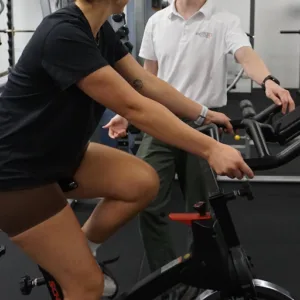
Once preseason arrives, the focus shifts towards implementing your training plan and preparing for the physical demands of competition based on your screening.
Additionally, many team based preseason programs are heavily based on building conditioning or capacity through running sessions.
This provides us with the opportunity to implement your individual plan which is more focused on strength, motor control, flexibility or power in the gym based on your screening, whilst further building on conditioning in a team scenario.
Load Management: Avoid Doing Too Much, Too Soon
An important thing to consider during preseason is ensuring you are not increasing your training load too quickly. After several weeks of reduced activity, suddenly returning to multiple runs, gym sessions and full-intensity team training can place demands on the body that it isn’t prepared to handle.
Cardiovascular fitness, muscular strength, tendon capacity and high-speed running tolerance all adapt at different rates, making gradual progression and effective load management essential for reducing injury risk. This is where understanding training loads is important in setting you up for preseason and being fit to play for round 1!
Understanding training load
Training load refers to the physical and psychological demands placed on your body through exercise, training and competition.
It can be considered in two ways:
External load (What you actually do during training)
Examples include:
- Total running distance
- High-speed running distance
- Number of sprints
- Gym sessions and weights lifted
- Duration of training sessions
Internal load (How your body responds to that training)
Examples include:
- Heart rate response
- Rating of perceived exertion (RPE)
- Muscle soreness and fatigue
- General recovery and wellbeing
Monitoring both external and internal load can help provide a better understanding of how your body is responding to training.
For example, two athletes might complete the exact same running session, but one may find it considerably more demanding due to differences in fitness, recovery, training history or injury status. This is why training programs should be individualised rather than assuming everyone can tolerate the same workload.
For example, a regular starter playing every minute of every game may require specific training reduction initially, compared to an individual who has limited playing time and is aiming to break into the starting team.
What is the Acute Workload Ratio (ACWR)?
One method commonly discussed in sports science is the Acute Workload Ratio (ACWR) from research conducted by Gabbett (2016). The ACWR compares an athlete’s recent training load (acute load) with their average training load over a longer period (chronic load).
Traditionally, this has been calculated using:
- Acute load: The total training load over the previous seven days.
- Chronic load: The average weekly training load over approximately the previous four weeks.
The concept is to understand how your recent training demands compare with the workload your body has been exposed to over a longer period. For example, if you’ve averaged two running sessions per week over the past month, suddenly increasing to five demanding running sessions in one week represents a substantial change in your training exposure.
The ACWR can help highlight changes like this and encourage more considered training progression. However, it’s important to understand its limitations. The ACWR is not a standalone injury prediction tool, and there is no single ratio that guarantees an athlete will avoid injury. It should be considered alongside other factors, including injury history, recovery, training intensity and individual responses to exercise.

How should you manage your training load?
The key to managing training load during preseason is to progressively increase training volume and intensity rather than making sudden jumps. Gradually reintroduce running frequency, build towards higher-intensity efforts such as sprinting, allow adequate recovery between demanding sessions and monitor changes in soreness, fatigue and overall wellbeing. Importantly, your starting point should reflect your actual offseason activity, not simply what you were capable of at the end of last season.
Remember, training load isn’t something to avoid. Gradually exposing your body to the physical demands of your sport helps build fitness, resilience and injury tolerance. The goal is to prepare your body for the demands of the upcoming season without unnecessary spikes in workload.
Set Yourself Up for a Successful Season
A successful preseason doesn’t happen overnight.The work you put into your offseason, the way you address previous injuries and how you progressively build your training load can all contribute to how prepared you are when the season begins.
Rather than waiting until the first team training session to start preparing, take advantage of the offseason to identify problem areas, develop a plan and establish a solid physical foundation.

If you’re unsure where to start, working with an appropriately qualified sports physiotherapist or exercise professional can help you identify areas for improvement and develop a program suited to your individual needs.
The takeaway? Don’t just train harder this preseason. Train smarter, build progressively and give yourself the best opportunity to perform consistently throughout the season.
Written by:
Luke Chetcuti
Physiotherapist | Master of Physiotherapy
University of South Australia
References
Whalan, M., Lovell, R. and Sampson, J.A. (2020) ‘Do niggles matter? Increased injury risk following physical complaints in football (soccer)’, Science and Medicine in Football, 4(3), pp. 216–224.https://doi.org/10.1080/24733938.2019.1705996.
Young, R., Nix, S., Wholohan, A., Bradhurst, R., & Reed, L. (2013). Interventions for increasing ankle joint dorsiflexion: A systematic review and meta-analysis. Journal of Foot and Ankle Research, 6, Article 46.https://doi.org/10.1186/1757-1146-6-46
Gabbett, T.J. (2016) ‘The training–injury prevention paradox: Should athletes be training smarter and harder?’, British Journal of Sports Medicine, 50(5), pp. 273–280.https://doi.org/10.1136/bjsports-2015-095788
Culvenor, A.G., Alexander, B.C., Clark, R.A., Collins, N.J., Ageberg, E., Morris, H.G., Whitehead, T.S. and Crossley, K.M. (2016) ‘Dynamic single-leg postural control is impaired bilaterally following anterior cruciate ligament reconstruction: Implications for reinjury risk’, Journal of Orthopaedic & Sports Physical Therapy, 46(5), pp. 357–364.https://doi.org/10.2519/jospt.2016.6305.