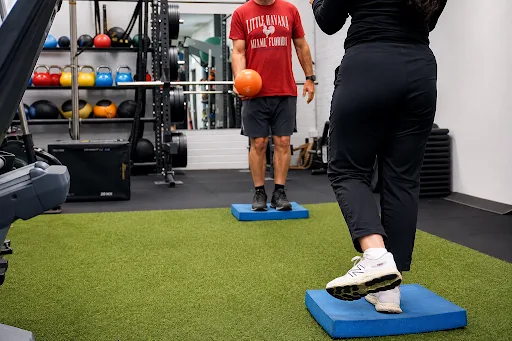
Balance is something most of us take for granted, until it starts to change. Whether it’s feeling unsteady walking on uneven ground, hesitating on stairs, or worrying about a fall, reduced balance can affect confidence just as much as physical ability.
The good news is that balance is a skill that can be trained. Through targeted exercise, an Accredited Exercise Physiologist can help improve balance, reduce falls risk and keep you doing the activities that matter most.
What is balance?
Balance is your body’s ability to keep you upright and stable while standing, walking or moving.
It relies on several body systems working together. Your eyes provide information about your surroundings, your inner ear detects movement and head position, and sensors in your muscles and joints tell your brain where your body is in space. Your brain then processes all of this information and coordinates the muscles needed to keep you steady.
As we get older, or after injury, illness or periods of inactivity, these systems can become less efficient. The result can be reduced confidence, slower reactions and an increased risk of losing balance.
Why does balance matter?
Good balance is about much more than preventing falls.
It helps you stay independent, remain physically active and continue doing everyday tasks safely—from carrying groceries and gardening, to playing with grandchildren or enjoying recreational sport.
Poor balance often leads people to avoid movement because they’re worried about falling. Unfortunately, doing less activity can cause muscles to become weaker and balance to decline even further, creating a cycle that’s difficult to break.
The encouraging news is that this cycle can often be reversed with the right exercise program. .
How can an Exercise Physiologist help?
Exercise is one of the most effective ways to improve balance.
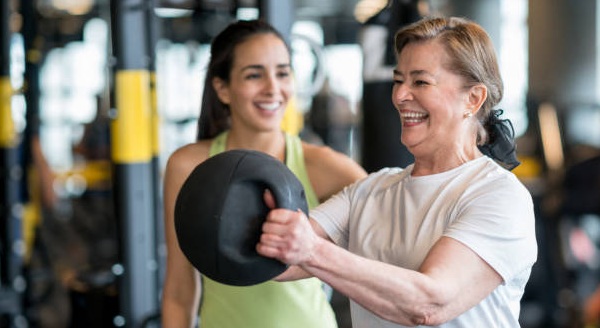
An Accredited Exercise Physiologist will assess your current strength, balance and mobility before designing an individualised program suited to your goals and ability.
Balance training isn’t simply standing on one leg. Depending on your needs, your program may include:
- Lower limb strengthening exercises
- Static and dynamic balance activities
- Walking and stepping drills
- Functional exercises that mimic everyday activities
- Confidence-building activities in a safe environment
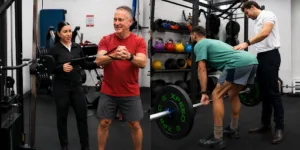
As your balance improves, your exercises gradually progress to continue challenging your body and improving your stability.
At Inertia Health Group, our Exercise Physiologists tailor programs to your individual needs, whether your goal is reducing falls risk, returning to activity after illness, or simply feeling more confident on your feet.
Can Balance Actually Improve?
Absolutely!
Research consistently shows that appropriately prescribed balance and strength training can significantly reduce falls risk and improve balance performance in older adults.
Improvements don’t happen overnight, but with regular practice, your muscles become stronger, your reactions become quicker and your body becomes more efficient at responding to changes in position.
Importantly, exercise doesn’t just improve physical ability, it often helps restore confidence. Many people find they’re more willing to walk outdoors, stay socially active and return to activities they had been avoiding.
The Key Takeaway
Balance naturally changes throughout life, but losing confidence in your balance doesn’t have to be accepted as part of aging.
Targeted exercise is one of the most effective ways to improve balance, build strength and reduce your risk of falls. With an individualised program from an Accredited Exercise Physiologist, you can improve your stability, stay active and maintain your independence.
If you’ve noticed changes in your balance or want to stay steady as you age, our Exercise Physiology team can assess your balance and develop a program tailored to your goals.
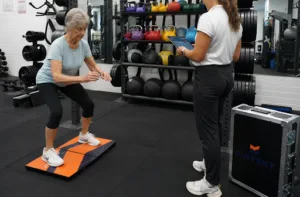
Teresa Battista
Clinical Exercise Physiologist
Bachelor of Clinical Exercise Physiology (Honours)
References
Sherrington, C., Fairhall, N.J., Wallbank, G.K., et al. (2020). Exercise for preventing falls in older people living in the community. Cochrane Database of Systematic Reviews.
World Guidelines for Falls Prevention and Management for Older Adults (2022). Age and Ageing, 51(9).
American College of Sports Medicine (2022). ACSM’s Guidelines for Exercise Testing and Prescription.