Osteoporosis is often associated with fragile bones, fractures and a fear of movement. It is understandable that being told you have osteoporosis might make you hesitant to lift weights, exercise or participate in activities you enjoy.
But here is the important part: having osteoporosis does not mean you should stop exercising.
In fact, appropriately prescribed exercise is an important part of managing bone health. The key is understanding which types of exercise provide the greatest benefit and how they can be safely progressed for you.
What is osteoporosis?
Osteoporosis is a condition where bones become weaker and more susceptible to fractures. Bone strength is influenced by factors including bone mineral density, bone structure, muscle strength, balance and previous fracture history.
While medications and nutrition can play an important role in managing osteoporosis, exercise is another important piece of the puzzle.
Research consistently shows that exercise can have beneficial effects on bone mineral density, particularly when programs include resistance and weight-bearing exercise.
But not all exercise provides the same stimulus to your bones.
So, what exercise is best for osteoporosis?
Rather than looking for one “best” exercise, a well-rounded program generally includes a combination of:
- Resistance training
2. Weight-bearing or impact exercise
3. Balance training
4. Postural and spinal extensor exercises
5. Aerobic activity
The exact combination should be tailored to your fracture risk, exercise history, symptoms and physical capabilities.
1. Resistance training: don’t be afraid of weights
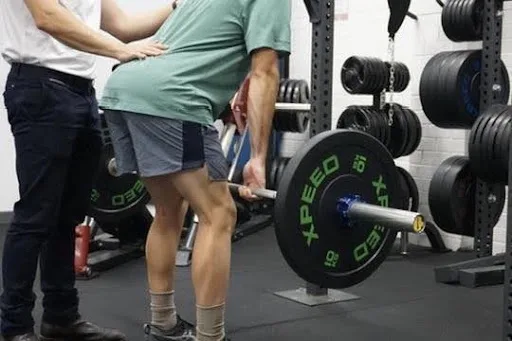
If you have osteoporosis, you might assume that lifting weights is dangerous.For most people, the opposite is true. Resistance training involves your muscles working against an external resistance, such as:
- Dumbbells
- Resistance machines
- Resistance bands
- Cable machines
- Body weight
As your muscles contract against resistance, they place mechanical loads through your bones. Over time, appropriately progressed resistance exercise can help maintain or improve bone mineral density as well as muscle strength and physical function.
A systematic review and meta-analysis of exercise in people with osteoporosis and osteopenia found that resistance exercise was associated with improvements in bone mineral density, with particularly promising effects at the hip (Zhang, et al., 2022).
This doesn’t mean you need to lift extremely heavy weights from day one.
Your program should start at an appropriate level and gradually increase as your strength and confidence improve. Exercises such as squats, step-ups, rows, presses and hip-hinge movements can all be incorporated into a resistance program, depending on the individual.
2. Weight-bearing and impact exercise
Your bones also respond to the forces placed through them during weight-bearing activity. Walking, stair climbing, jogging, dancing and some jumping activities can provide varying levels of impact through the skeleton.
Research suggests that impact exercise can improve bone mineral density, although the amount and type of impact should be appropriate for the individual’s fracture risk and physical capacity (Rodrigues, et al., 2021).
For someone who is new to exercise, walking and stair climbing may be an appropriate starting point.Someone who is already active may be able to incorporate higher levels of impact, such as jogging, hopping or jumping.
However, more impact isn’t automatically better. If you have a history of vertebral fractures, multiple fractures or a high risk of falling, higher-impact exercise may not be appropriate without individual assessment.
3. Balance training
Strong bones are important, but so is preventing falls. A fall can increase the likelihood of a fracture, particularly when bone strength is reduced.
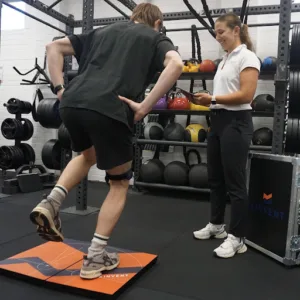
Balance exercises can improve your ability to control your body and respond to changes in your environment. They can be incorporated alongside strength training and aerobic exercise.
Examples include:
- Tandem stance
- Single-leg balance
- Step-ups
- Controlled changes of direction
- Dynamic balance exercises
For people with osteoporosis who have an increased risk of falling, guidelines recommend incorporating balance and strength training into their exercise program.
4. Don’t forget your back
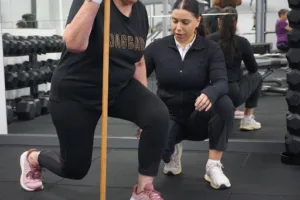
Posture and spinal strength are another important consideration. Exercise targeting the muscles that extend the spine can help improve spinal extensor strength and posture.
Current consensus recommendations emphasise strength, balance and postural alignment rather than simply telling people with osteoporosis to avoid movement (Giangregorio, et al., 2015). This is particularly relevant for people who have experienced vertebral fractures.
Rather than avoiding all bending or movement, the focus should be on learning how to move and load your spine safely, with exercises and techniques adapted to your individual circumstances.
What about Pilates, swimming and cycling?
These activities aren’t necessarily “bad” for osteoporosis.
Swimming and cycling are excellent forms of cardiovascular exercise, but because the water or bike supports much of your body weight, they provide less impact through the skeleton than activities such as walking or jogging.
Similarly, Pilates can be a useful component of a broader exercise program for strength, movement control and balance.
However, the type of Pilates matters if you have osteoporosis, particularly if you have a history of vertebral fractures. Some positions involving repeated or loaded end-range spinal flexion or twisting may need to be modified for your individual need.
The goal isn’t necessarily to avoid an activity altogether — it is to modify it appropriately for the individual.
What exercises should you avoid?
This is where osteoporosis advice can sometimes become unnecessarily frightening.
You may have heard that if you have osteoporosis you should:
- Never lift heavy weights
- Never bend your back
- Never twist
- Avoid exercise altogether
It isn’t quite that simple.
Current expert recommendations favour individualised exercise prescription rather than blanket restrictions (Giangregorio, et al., 2015).
However, certain movements may need modification, particularly for people with vertebral fractures or a high fracture risk. Repeated or loaded end-range spinal flexion and twisting may be inappropriate for some individuals. High-impact or high-fall-risk activities may also need to be modified.
This is why individual assessment matters.
You don’t have to be “fit” to start
Perhaps the most important message is that you don’t need to walk into a gym and start lifting heavy weights to benefit from exercise.
Your starting point might be:
Beginner:
Walking + basic balance exercises + light resistance exercises
↓
Building capacity:
Progressive strength training + more challenging balance + stair climbing
↓
More advanced:
Heavier resistance training + appropriately progressed impact exercise
The goal is to gradually increase the challenge placed on your muscles, bones and cardiovascular system.
Recent evidence continues to support progressive resistance exercise as an important strategy for improving bone mineral density in older adults, although the optimal exercise dose varies between individuals and skeletal sites.
What does this mean if you have osteoporosis?
The takeaway isn’t that there is one magic exercise for osteoporosis.
It’s that your bones, muscles and balance can respond to appropriately prescribed exercise.
A good program may include:
- Strength
Build muscle and provide mechanical loading to your bones. - Weight-bearing/impact
Provide additional loading through the skeleton where appropriate. - Balance
Improve stability and help reduce falls risk. - Postural strength
Develop spinal extensor strength and movement strategies. - Aerobic exercise
Support cardiovascular fitness and overall health.
And importantly, the program should change as you get stronger.
When should you speak to a Physiotherapist or Exercise Physiologist?
If you have osteoporosis, exercise can be safe and beneficial — but you may benefit from individual guidance if you:
- Have previously had a vertebral fracture
- Have had multiple fractures
- Are recovering from a fracture
- Have significant pain
- Are unsure which exercises are appropriate
- Have poor balance or a history of falls
- Have not exercised for a long time
- Want to start lifting weights but don’t know where to begin
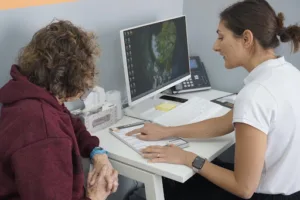
A physiotherapist or exercise physiologist can assess your current strength, balance, movement and exercise capacity and develop a program that can be started safely and progressed over time.
The bottom line
Osteoporosis doesn’t mean you need to wrap yourself in cotton wool.The right exercise can help you build strength, improve balance, maintain or improve bone health and keep doing the activities you enjoy.
The key isn’t avoiding movement.It’s finding the right movement, at the right level, and progressively building your capacity.
This article provides general information and is not a substitute for individual medical or exercise advice. If you have osteoporosis, a history of fractures or other health conditions, speak with your GP, physiotherapist or exercise physiologist before starting a new exercise program.
Written by
Alix Way
Physiotherapist | Master of Physiotherapy
University of Sydney
References
- Zhang, S. et al. (2022) ‘Effect of exercise on bone mineral density among patients with osteoporosis and osteopenia: A systematic review and network meta-analysis’, Journal of Clinical Nursing, 31(15–16), pp. 2100–2111.
- Cui, L. et al. (2023) ‘Effects of exercise based on ACSM recommendations on bone mineral density in individuals with osteoporosis: a systematic review and meta-analyses of randomized controlled trials’, Frontiers in Endocrinology.
- Giangregorio, L.M. et al. (2015) ‘Too Fit To Fracture: outcomes of a Delphi consensus process on physical activity and exercise recommendations for adults with osteoporosis with or without vertebral fractures’, Osteoporosis International, 26, pp. 891–910.
- Beck, B.R. et al. (2022) ‘Strong, steady and straight: UK consensus statement on physical activity and exercise for osteoporosis’, British Journal of Sports Medicine.
- National Osteoporosis Guideline Group (2024) Clinical guideline for the prevention and treatment of osteoporosis.