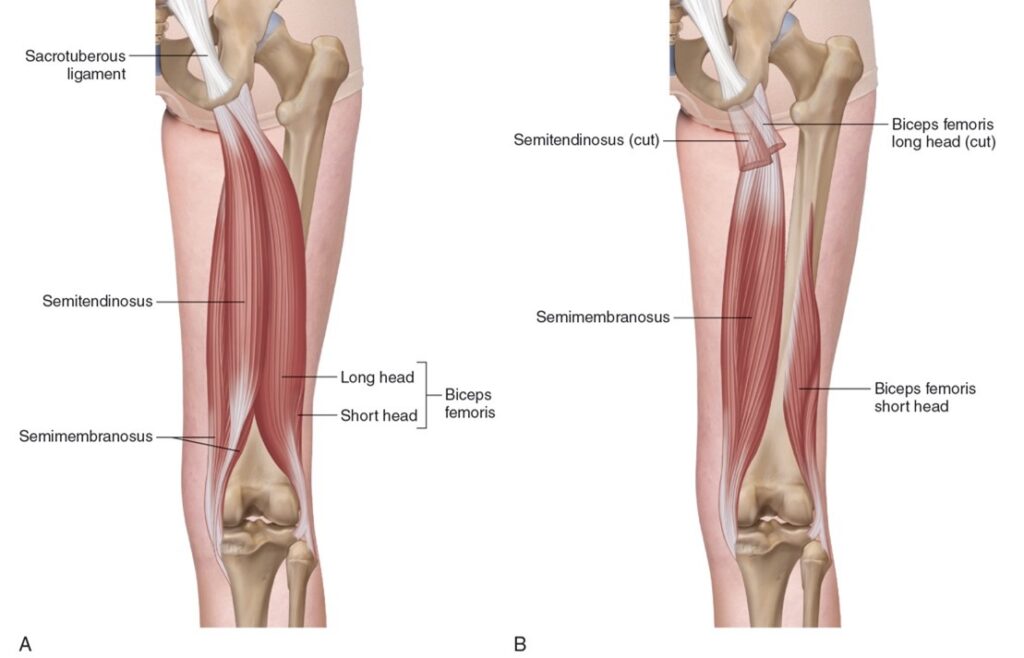
Common Areas Of Tendon Pain and Injury
Tendon pain is something that can be highly debilitating. The most common areas of tendon pain in the body are in the Achilles tendon, the Patella tendon, the hamstring tendon, the rotator cuff tendon, and those pesky elbow tendons (although they do occur in other tendons of the body). All these tendon pain problems have commonalities and differences in how we treat them. This individual approach depends on the stage or progression of the tendon injury, the patient’s clinical presentation, and the end goal, whether a return to sport, return to work, or return to whatever the patient holds value in as an activity. It might be as simple as pouring tea without pain or fear of dropping the kettle!
How do we help alleviate tendon pain?
We approach tendon pain first to reduce the acute pain stage. This may be done with a simple icing protocol or completed with anti-inflammatory medication and a relative period of de-loading the tendon through some activity modification. Another key is beginning some safe isometric exercise (holding tension in a particular direction and contracting the tissue); this relieves pain immediately after being performed and 45 minutes later. This pain change is because of specific processes that occur in the tissue that stimulate some neurophysiological changes in the motor cortex ( a fancy way of saying nerve and cellular stimulation, which then impacts the centres of the brain responsible for feedback and sensory input as well as the output of the corresponding area in the brain!)
Tendon Pain Rehabilitation
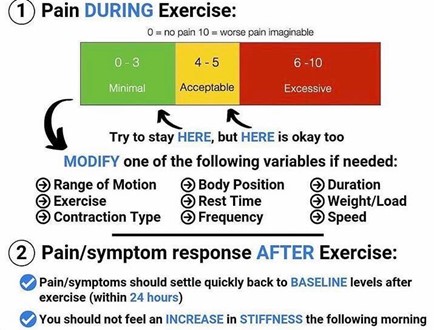
Once we can settle the area, this does not mean the complete elimination of pain. Safe pain with exercise can be rated from 0 to 5/10, with 0 being no pain and 10 being the worst imaginable pain. Ideally, you want to train between 0 and 3, but a 4-5 is also safe. The pain must settle quickly to baseline after exercise (within 24 hours) without stiffness the following morning. We can then begin some further training and loading of the affected tissues. In the short term, research shows that these isometric exercises are better at changing pain than isotonic exercises (holding a contraction against resistance vs. moving the muscle through range against resistance). However, isometrics are not very functional and will not help you progress with your day-to-day activities. Therefore, a well-devised gradual isotonic loading programme is imperative to improving the functionality of the tissue and ultimately getting patients to achieve their goals.
How can a physiotherapist or podiatrist help you with your tendon pain?
Your Physiotherapist or podiatrist are crucial elements of the rehabilitation team and process, as they can effectively identify where you are in the stage of your tendinopathy and what to implement immediately to begin alleviating your pain and improving your function.
Can I exercise with tendon pain?
Dr. Caleb Burgess posted the following infographic about how to modify pain. I will discuss this in another blog post in more detail!