
What is Physiotherapy?
Physiotherapy is a first-contact allied health profession regulated by the Physiotherapy Board of Australia under the Australian Health Practitioner Regulation Agency (AHPRA). Physiotherapists assess, diagnose and manage a wide range of movement and musculoskeletal conditions, using approaches such as manual therapy, exercise prescription and patient education.
Inertia Health Group provides Physio Grange residents access to assessment and management of injuries and conditions affecting people across the lifespan, including ocean swimmers, older adults and those recovering from surgery.
As a first-contact practitioner, a Physiotherapist can be seen without a GP referral for private appointments, although a referral is required to claim under Medicare, DVA, WorkCover or CTP. Our nearest clinic is a 7-minute drive from Grange via Trimmer Parade.
What Conditions Can Physiotherapy Help With?
Physiotherapists at Inertia work with clients across the lifespan, and every treatment approach is individualised following a thorough assessment. Physiotherapists at our nearest clinic to Grange commonly see presentations such as shoulder overuse from swimming and paddling, plantar fasciitis related to beach running and hip osteoarthritis, among many others.






Musculoskeletal and Sports-Related Conditions
Shoulder overuse from ocean swimming and paddling, and plantar fasciitis linked to running on sandy Grange shoreline, are among the more common presentations seen from Grange’s coastal residents. Physiotherapists also assess and manage lower back pain, neck pain, headaches, and joint-related conditions affecting the shoulder, knee, ankle, elbow and hip.
Post-Surgical and Orthopaedic Rehabilitation
Physiotherapists commonly work with clients following joint replacement surgery, ACL reconstruction, rotator cuff repair, joint replacements & spinal surgery. Post-surgical rehabilitation is always guided by the treating surgeon’s protocol and individual Physio assessment.
Spinal and Persistent Chronic Pain Conditions
Physiotherapy is used in the assessment and management of lumbar disc-related pain, sciatica, wry neck and cervicogenic headaches.
Persistent and chronic pain is complex, and outcomes vary between individuals. Physiotherapy is one component of evidence-informed care and may be used alongside advice from your GP, pain specialist, Exercise Physiologist and other members of your care team.
Neurological and Complex Conditions
Our Physiotherapists support the management and rehabilitation of neurological conditions, including stroke, Parkinson’s disease, multiple sclerosis, muscular dystrophy and acquired brain injury. Alongside some of these conditions, Grange also has a number of residents for whom balance and falls-prevention strategies are crucial for their longevity and well-being. This falls and balance Physiotherapy also form part of our neurological physiotherapy service for these groups.
Work Injuries, Motor Vehicle Injuries and DVA
Inertia Health Group accepts ReturnToWorkSA, CTP and DVA (white and gold card) referrals for the assessment and management of work-related and motor vehicle injuries as well as those managing injuries who have served in our armed forces.
NDIS Physiotherapy
Inertia accepts self-managed, plan-managed and NDIA-managed NDIS participants. Home-visit Physiotherapy is provided to eligible NDIS participants in Grange and surrounding suburbs along Adelaide’s western coast. Please enquire about our capacity for home visit services.
Why Choose Inertia for Physio in Grange
Inertia Health Group’s Physiotherapy service combines musculoskeletal assessment, exercise-based rehabilitation and access to a broader allied health team. Services available to Grange residents include Musculoskeletal Physiotherapy, sports, spinal and general Physiotherapy, neurological rehabilitation, vertigo management, pre and post operative care, pilates and a wide variety of exercise and rehabilitation classes as well as access to exercise physiology, massage and Podiatry Care all in the one great modern location.
- Senior clinicians with experience across sport, spinal musculoskeletal and neurological Physiotherapy as well aspost-surgical rehabilitation
- AHPRA-registered Physiotherapists
- A variety of Consultation types and lengths pending your conditions.
- On-site rehabilitation gym & a dedicated modern Pilates Studio
- Same-day appointment availability
- First-contact practitioner status — no GP referral required for private clients
- Access to a multi-disciplinary team, including podiatry, exercise physiology and remedial massage
Our Physiotherapists

Patrick Carbone
DPT, BExSc, BAppSc Human Movement & Health Studies, APAM Senior Physiotherapist
Practice principal with close to 15 years of experience, including previous roles in elite sport.

Robert Frick
Master of Physiotherapy and Bachelor of Health Sciences, APAM Senior Physiotherapist
Inertia’s longest-serving Physiotherapist of over 10 years, with experience across musculoskeletal, neurological and sports conditions.

Lauren Gee
Master of Physiotherapy and Bachelor of Applied Science, University of South Australia, APAM Senior Physiotherapist
Experience across sports and post-operative rehabilitation, with further training in women’s health Physiotherapy.

Anna Walsh
Bachelor of Physiotherapy (University of Melbourne), APAM Senior Physiotherapist
More than two decades of private practice experience, with a particular interest musculoskeletal Physiotherapy & in healthy ageing, with extensive experience in elite sports.
What to Expect at Your Physiotherapy Appointment
Your first Physiotherapy appointment involves history-taking, a physical assessment, a discussion of findings and a proposed management plan and hands on treatment.
Our Albert Park clinic is an approximately 7-minute drive from Grange via Trimmer Parade, with on-site and street parking available.
The Patient Journey
The typical patient journey at Inertia begins with an initial consultation, followed by a hands on care and personalised exercise programs, regular reviews, monitoring progress reporting where required.
A Typical Initial Physiotherapy Session at Inertia
A typical initial session includes a discussion of your history and goals, a physical assessment, an explanation of assessment findings and the development of an individualised management plan.
Initial Physiotherapy Consultation
Initial consultations are scheduled for a full 40minutes. Please bring any relevant scans, referral letters and a current list of medications. HICAPS is available on-site for instant private health fund claiming. Inertia accepts Medicare (CDM/GPCCMP), DVA, ReturnToWorkSA, CTP and NDIS referrals. Current fees, including gap payment information, are available on request at the time of booking. Private health rebates vary by fund and level of cover.
Physio Program Prescription
During your initial consultation, Physiotherapists aim to treat your condition providing you with pain relief followed by the prescription of a personalised exercise program delivered through Inertia’s digital exercise platform and accessible via our App or you may prefer it hand written. Programs are progressed individually rather than following a one-size-fits-all approach, and are developed over time as your presentation and symptoms improve.
Physio Program Review
Reviews are conducted as appropriate for your presentation and condition. Outcome measures may include pain scores, functional tests and strength benchmarks as well as use of our force testing technology provided by the Kinvent Platform
Progress Reporting
Physiotherapists provide progress reports for NDIS support coordinators, WorkCover case managers, DVA and referring GPs, as required or requested.
Clinic Gallery
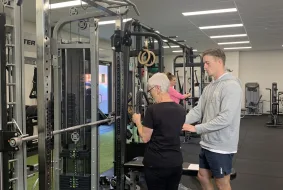
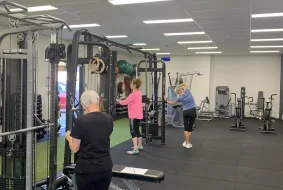

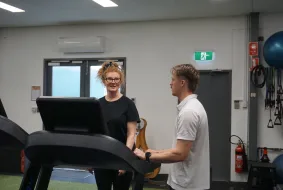
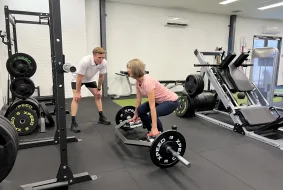
Frequently Asked Questions about Physiotherapy in Grange
Can you help with shoulder pain from ocean swimming at Grange?
Yes. Shoulder overuse from ocean swimming and paddling is a presentation our Physiotherapists commonly assess. Management may include manual therapy, dry needling, load management advice and an individualised exercise program. Read more about shoulder impingement andshoulder bursitis.
Do you assess plantar fasciitis or Achilles issues from running along the Grange coastline?
Yes. Plantar fasciitis and Achilles tendinopathy related to beach and coastal running are conditions our Physiotherapists regularly assess, alongside advice on loading and footwear as part of an individualised assessment. See our plantar fasciitis and Achilles tendinopathy pages for more information.
Do I need a GP referral to see a Physiotherapist?
No GP referral is required for a private Physiotherapy appointment, as Physiotherapists are first-contact practitioners. A GP referral is required to claim under Medicare (CDM/GPCCMP), DVA or WorkCover. See First Visit for what to bring.
Do you accept DVA, WorkCover and CTP referrals?
Yes. Inertia accepts DVA (white and gold card), ReturnToWorkSA and CTP referrals. Read more about our DVA physiotherapy and work injury physiotherapy services.
How much does a Physiotherapy appointment cost?
Fees vary depending on the type and length of consultation. Current fees, including gap payment information, are available on request at the time of booking. Call our team on (08) 8359 2022 for up-to-date pricing.
Will my private health fund cover Physiotherapy?
Private health rebates vary by fund and level of cover. HICAPS is available on-site for instant claiming at the time of your appointment. We recommend checking your level of cover with your fund before booking.
How many Physiotherapy sessions will I need?
The number of sessions required varies based on your individual assessment and is not predetermined. Your Physiotherapist will discuss an expected plan with you following your initial consultation and review this as your treatment progresses.
Do you provide NDIS Physiotherapy and home visits for Grange residents?
Yes. Inertia accepts self-managed, plan-managed and NDIA-managed NDIS participants and provides home-visit physiotherapy to eligible participants in Grange and surrounding suburbs. This is subject to availability and capacity. Read more about our NDIS physiotherapy and NDIS home visit physiotherapy services.
What Our Clients Say


 Trustindex verifies that the original source of the review is Google.
 Trustindex verifies that the original source of the review is Google.
 Trustindex verifies that the original source of the review is Google.
 Trustindex verifies that the original source of the review is Google.
 Trustindex verifies that the original source of the review is Google.
 Trustindex verifies that the original source of the review is Google.
 Trustindex verifies that the original source of the review is Google.
 Trustindex verifies that the original source of the review is Google.
 Trustindex verifies that the original source of the review is Google.
What Our Clients Say
Trustindex verifies that the original source of the review is Google. Trustindex verifies that the original source of the review is Google. Trustindex verifies that the original source of the review is Google. Trustindex verifies that the original source of the review is Google. Trustindex verifies that the original source of the review is Google. Trustindex verifies that the original source of the review is Google. Trustindex verifies that the original source of the review is Google. Trustindex verifies that the original source of the review is Google. Trustindex verifies that the original source of the review is Google. Local Context for Grange Physiotherapy Clients
Grange is a coastal suburb with a mixed demographic of older residents, young families and beach-lifestyle professionals. Ocean swimming and paddling near Grange Jetty load the shoulder differently to land-based exercise, and Physiotherapists at our nearest clinic assess swimming-related shoulder presentations all manner musculoskeletal injury from Grange residents as part of an individualised assessment.
Running along the Grange coastline on soft sand also loads the calf, Achilles and plantar fascia differently to running on firm surfaces. Physiotherapists can discuss loading strategies and footwear considerations as part of an individualised assessment for coastal runners.
Golf at Grange Golf Club involves repeated rotational loading of the spine and repetitive upper-limb use. Physiotherapy assessment for golfers may include spinal mobility, hip range and shoulder strength testing. For Grange’s senior residents, Physiotherapy input may also include balance and falls-prevention strategies alongside management of conditions such as hip and knee osteoarthritis.
Book an Appointment Near You Today
Inertia Health Group physiotherapists are registered with the Physiotherapy Board of Australia via AHPRA. Information provided on this page is general in nature and does not replace individual assessment and advice from a registered Physiotherapist. Any recommended treatment depends on your individual presentation and assessment findings.
Written & reviewed by Patrick Carbone, DPT, BExSc, BAppSc (Human Movement & Health Studies), APAM
15+ years experience in Physiotherapy
Last reviewed: September 2026